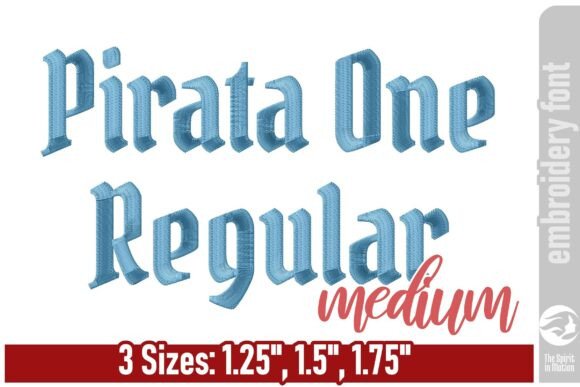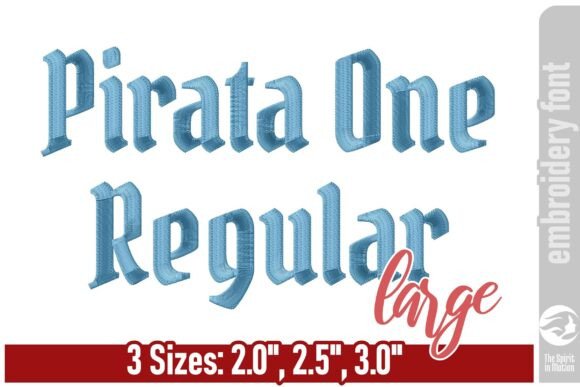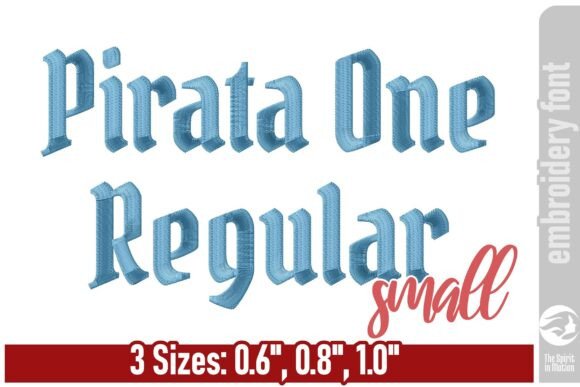
Pirata One Blackletter Font: Bold Gothic Flair
As I prepare my booth for this weekend's craft fair, the pressure is on to curate a collection that stops browsers in their tracks. In a sea of soft script and minimalist line art, standing out requires something with weight and character. That is why I am turning my attention to the Pirata One Blackletter Font - Small. This isn't just another digital asset; it is a potential headline maker for my handmade product line. Inspired by traditional blackletter lettering, this font promises a bold, gothic flair that could redefine the aesthetic of my current inventory. As an experienced embroidery designer, I need to know if this design translates from screen to stitch effectively, especially when working within the constraints of small-scale production for market days.
First Impressions: A Statement in Stitch
The moment I loaded the preview of Pirata One Blackletter Font - Small, the vibe was undeniable. It feels premium, edgy, and deeply rooted in history, yet surprisingly versatile for modern applications. While many Embroidery Fonts lean towards the cute or the rustic farmhouse style, this design commands attention with its sharp angles and heavy contrast. It is not "soft" in the traditional sense; it is declarative. For a craft fair environment where visual noise is high, this kind of clarity is gold. The blackletter style evokes a sense of old-world craftsmanship, which aligns perfectly with the narrative of handmade goods. It suggests that the item it adorns is not mass-produced but rather a piece of artisanal quality. Whether used on a dark hoodie or a crisp white tote, the font carries an inherent authority that elevates the perceived value of the finished product.
Product Suitability and Market Appeal
In planning my table display, I am evaluating where this specific font will perform best. The "Small" designation in the title suggests it is optimized for compact applications, making it ideal for items where space is at a premium but impact is necessary.
- Tote Bags and Market Bags: A single word or a short monogram in Pirata One on the corner of a canvas tote creates an instant brand mark. It looks less like a logo and more like a stamp of authenticity.
- Aprons and Tea Towels: For kitchen linens, this font adds a touch of dramatic flair. Imagine "BAKER" or "CHEF" stitched in this gothic style on a linen apron; it transforms a utility item into a statement piece for the home.
- Embroidered Patches: This is likely the strongest use case. Patches are huge sellers at craft fairs. The dense, bold lines of the blackletter style hold up incredibly well on patch backing, creating a tactile, high-quality feel that customers love to touch.
- Caps and Hats: Curved surfaces can be tricky, but the structural nature of blackletter letters often handles the curve of a cap front better than flowing scripts, provided the sizing is correct.
- Small Pouches and Pillow Covers: As an accent design, it works beautifully on zippered pouches or the corner of a throw pillow, offering a sophisticated alternative to standard block fonts.
For the Etsy seller or boutique maker, the photogenic quality of this font cannot be overstated. The high contrast of the strokes creates excellent shadows and depth in product photography, making listings pop in search results. It serves as a powerful tool for brand consistency across a diverse range of handmade products.
Production Realities and Technical Considerations
While the aesthetic appeal is high, practical production is where the real judgment happens. Blackletter fonts are notorious for having tight spaces between strokes and dense areas that can cause thread buildup. When reviewing the machine embroidery design files, one must be vigilant about stitch density. If the density is too high, the fabric may pucker, or the threads may break, especially on textured materials like terry cloth towels or thick canvas.
It is crucial to test this design on scrap fabric before committing to a batch run. I recommend checking how the design behaves on both light and dark fabrics. On dark fabric, the negative space within the letters (the counters) needs to be wide enough to prevent the background color from bleeding through visually, which can muddy the crisp gothic look. Conversely, on light fabric, ensure the thread coverage is sufficient to hide the stabilizer underneath.
Another critical factor is the hoop size and placement. Since this is a "Small" version, it is likely intended for details rather than large back-piece designs. Ensure your hoop allows for precise positioning, particularly on curved items like caps or structured items like patches. Using the right stabilizer is non-negotiable here; a cut-away stabilizer is often safer for dense fonts to maintain shape over time, whereas tear-away might leave edges fraying in the intricate parts of the letters.
Sales Strategy and Customer Engagement
From a sales perspective, Pirata One Blackletter Font - Small offers a unique selling proposition. Most craft fair attendees expect cursive names or simple sans-serif blocks. Seeing a genuine blackletter font signals a higher level of design intent. It appeals to customers looking for something "different"—those who appreciate tattoo aesthetics, vintage typography, or gothic subcultures. This specificity can actually drive higher price points because the item feels custom and exclusive.
However, legibility is key. Blackletter can be hard to read if the text is too long or the size is too small. My strategy is to keep the wording minimal. Single words, initials, or very short phrases work best. This ensures the design is understood at a glance, which is essential when a customer is walking past a busy booth. If they have to stop and squint to decipher the text, you have likely lost the sale. As a craft fair product, immediate visual impact is everything.
Final Designer Notes and Licensing
Before running this design commercially, there are several housekeeping tasks to complete. First, verify the commercial licensing terms included with the digital embroidery file. Just because a font is available does not automatically grant the right to sell finished physical goods made with it; always confirm the license allows for commercial embroidery sales. Second, create at least one real mockup to serve as your booth sample. Customers need to see the texture and dimension of the stitches to appreciate the value. Finally, review the thread colors. While black thread on white fabric is classic, experimenting with metallic threads or deep jewel tones could enhance the gothic vibe and make the finished product truly shine.
In conclusion, Pirata One Blackletter Font - Small is a potent addition to any embroidery designer's library. It bridges the gap between historical elegance and modern edge. With careful attention to stitch density, fabric choice, and legibility, it has the potential to become a bestseller in your small shop product lineup. It is not just a font; it is a branding tool that tells a story of boldness and craftsmanship.