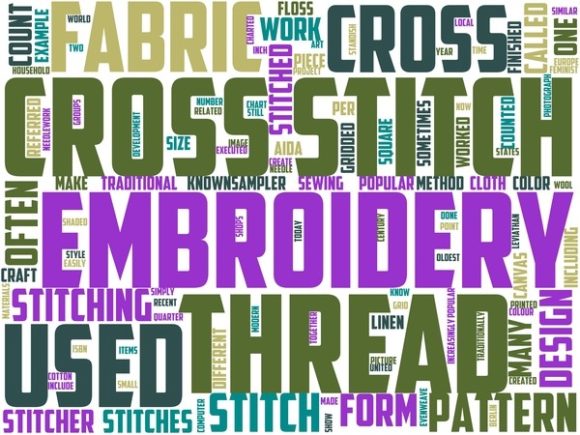
Cross Stitch Wordart Background Review
As an embroidery designer who has spent years digitizing logos and testing files for small business merchandise, I approach every new asset with a critical eye. We are not just looking for pretty pictures; we are looking for functional, durable, and brand-enhancing tools. Recently, I evaluated the Cross Stitch Wordart Background, a digital asset categorized under Print Templates and Graphics. While the description highlights its use for decorating clothes, posters, pillows, cups, tags, and notebooks, my focus was strictly on its viability for commercial embroidery and branded patch production. For Etsy sellers, boutique owners, and apparel decorators, understanding how a hand-drawn wordcloud translates from screen to stitch is vital for maintaining professional standards.
First Impressions: Visual Personality and Brand Fit
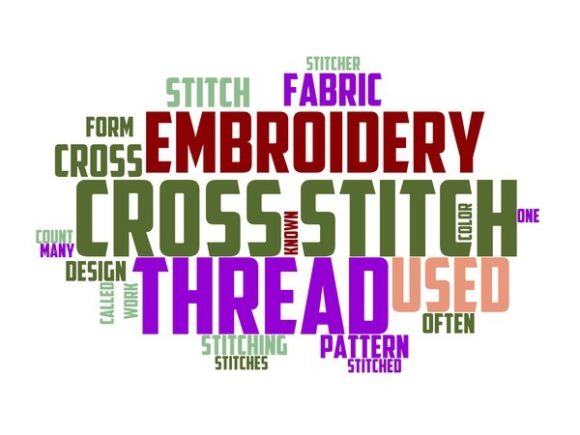
The immediate appeal of the Cross Stitch Wordart Background lies in its aesthetic versatility. The description notes it is a "beautiful hand drawn colorful wordcloud," which suggests a texture that is organic rather than rigidly geometric. In the world of branding, this distinction matters. A rigid, vector-perfect logo often feels corporate, whereas a hand-drawn style conveys warmth, approachability, and craftsmanship. For a local bakery, a florist, or a creative studio, this visual personality aligns perfectly with a brand identity that values the handmade product experience.
However, "colorful" can be a double-edged sword in embroidery. While vibrant thread colors catch the eye, they also increase production time and cost. My initial assessment is that this design feels playful and inspirational, making it an excellent candidate for lifestyle brands rather than strict corporate uniforms. It carries a rustic yet modern vibe, suitable for businesses that want to appear friendly and authentic. If your brand relies on elegance or minimalism, you might need to simplify the color palette before committing to production.
Real-World Applications for Small Business Merch
When considering where to apply this machine embroidery design, we must look beyond simple decoration. The true value lies in how it enhances small business merch. Here is how I envision this asset performing in real commercial embroidery projects:
- Embroidered Patches: This is perhaps the strongest use case. A wordcloud design works exceptionally well on woven or embroidered patches that can be ironed or sewn onto denim jackets, canvas totes, or laptop bags. The irregular nature of a wordcloud allows for creative shaping, avoiding the boring rectangular boundaries of traditional patches.
- Apron Embroidery: For cafes and bakeries, staff aprons are walking billboards. Placing a simplified version of this wordcloud on the chest pocket area adds a touch of whimsy. It reinforces the idea that the staff are craftspeople, not just service workers.
- Tote Bag Design: Canvas tote bags are staples for boutique merchandise. The Cross Stitch Wordart Background can serve as a central graphic element. Because tote bags have a flat, stable surface, the design can retain more detail than it could on a curved cap.
- Cap Embroidery: Using this on caps requires caution. The front panel of a cap is small and curved. I would recommend using only a segment of the wordcloud or simplifying the text to ensure legibility. Complex word clouds can become muddy when stitched on such a limited canvas.
- Product Packaging Accents: While primarily a digital graphic, this asset can be printed on hang tags or tissue paper. Integrating the embroidered look into your printable mockup and packaging creates a cohesive unboxing experience for customers.
Technical Considerations and Stitch Density
Transitioning from a graphic to a physical embroidery file requires technical diligence. The term "wordcloud" implies many small elements and potentially intricate details. In embroidery, tiny lettering and tight spacing are notorious for causing thread breaks and fabric puckering. Before running a full production batch, you must evaluate the stitch density. If the original graphic is too dense, it will create a stiff, heavy patch that may not drape well on clothing.
I strongly advise testing the design in black and white first. This removes the distraction of thread colors and allows you to focus on the structural integrity of the stitches. Check if the design holds together at small patch sizes. If the letters merge into a solid blob when scaled down, the design is not suitable for small applications like sleeve details or collar tabs. You may need to work with a digitizer to adjust the spacing and simplify the outlines.
Furthermore, consider the fabric texture. This design might look stunning on smooth cotton or denim, but it could struggle on textured towels or fuzzy fleece. The loops of the fabric can obscure fine details. Always test on the actual material you intend to sell. Use the proper stabilizer—likely a cut-away stabilizer for garments that will undergo frequent washing—to ensure the design remains crisp and does not distort over time.
Impact on Brand Identity and Customer Trust
Why go through the trouble of evaluating a specific design like Cross Stitch Wordart Background? Because consistency builds trust. When a customer sees the same high-quality, thoughtful design on your website, your packaging, and your physical product, it reinforces your brand identity. A sloppy or poorly executed embroidery job can detract from perceived value, making a premium product feel cheap. Conversely, a well-executed, inspirational design elevates the finished product.
For Etsy sellers and craft business assets, uniqueness is key. Using a generic clip-art style word cloud might make your brand blend in. However, treating this graphic as a custom design element—adjusting colors to match your brand palette and scaling it appropriately for different items—creates visual consistency. It shows buyers that you care about the details. This attention to detail drives buyer engagement and encourages repeat purchases. Customers are not just buying a mug or a shirt; they are buying into the aesthetic and values your brand represents.
Practical Designer Notes for Implementation
To ensure success with this asset, follow these practical steps before launching your campaign:
- Verify Licensing: The product is listed under Print Templates and Graphics. Confirm commercial licensing before business use. Ensure you have the right to modify the design for embroidery purposes, as some graphic licenses do not cover derivative works like digitized embroidery files.
- Check File Specifications: The description does not provide exact stitch count, file format, or hoop size. You must check these details. If you are digitizing it yourself from the graphic, ensure you have the high-resolution source file. If buying a pre-digitized version, confirm it fits your standard hoop size.
- Create a Mockup: Use a printable mockup to visualize the design on various products. Place it beside other design assets to ensure it complements your existing collection rather than clashing with it.
- Test Wash Durability: Items like aprons and work shirts need frequent washing. Run a wash test on your sample to ensure the thread colors do not bleed and the stitches do not unravel.
- Client Approval: If you are creating custom apparel for a client, always present a physical sample or a high-quality digital proof. Explain the limitations of small lettering in embroidery to manage expectations.
In conclusion, the Cross Stitch Wordart Background offers significant potential for small business owners looking to add a personal, handmade touch to their merchandise. It bridges the gap between digital graphics and tactile embroidery. However, its success depends entirely on thoughtful application. By respecting the technical limits of embroidery machines, choosing the right fabrics, and aligning the design with your brand identity, you can transform this simple graphic into a powerful tool for customer connection. Whether used on a tote bag, a patch, or an apron, let the quality of the execution reflect the quality of your brand.